


Page 113 - Revista Portuguesa - SPORL - Vol 60. Nº3
P. 113
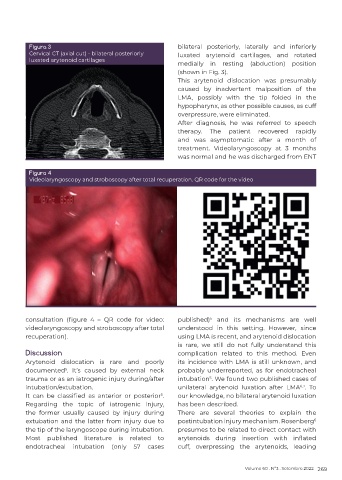
Figura 3                                         bilateral posteriorly, laterally and inferiorly
           Cervical CT (axial cut) - bilateral posteriorly   luxated  arytenoid  cartilages,  and  rotated
           luxated arytenoid cartilages
                                                            medially in resting (abduction) position
                                                            (shown in Fig. 3).
                                                            This arytenoid dislocation was presumably
                                                            caused by inadvertent malposition of the
                                                            LMA, possibly with the tip folded in the
                                                            hypopharynx, as other possible causes, as cuff
                                                            overpressure, were eliminated.
                                                            After diagnosis, he was referred to speech
                                                            therapy.  The  patient  recovered  rapidly
                                                            and was asymptomatic after a month of
                                                            treatment. Videolaryngoscopy at 3 months
                                                            was normal and he was discharged from ENT

           Figura 4
           Videolaryngoscopy and stroboscopy after total recuperation. QR code for the video


          consultation  (figure  4  –  QR  code  for  video:   published)  and its mechanisms are well
                                                                       5
          videolaryngoscopy and stroboscopy after total     understood in this setting. However, since
          recuperation).                                    using LMA is recent, and arytenoid dislocation
                                                            is rare, we still do not fully understand this
          Discussion                                        complication related to this method. Even
          Arytenoid dislocation  is rare  and  poorly       its  incidence  with  LMA  is  still  unknown,  and
          documented .  It’s  caused  by  external  neck    probably underreported, as for endotracheal
                       5
          trauma or as an iatrogenic injury during/after    intubation . We found two published cases of
                                                                      5
          intubation/extubation.                            unilateral arytenoid luxation after LMA . To
                                                                                                     6,7
          It  can  be  classified  as  anterior  or  posterior .   our knowledge, no bilateral arytenoid luxation
                                                      5
          Regarding the topic of iatrogenic injury,         has been described.
          the former usually caused by injury during        There are several theories to explain the
          extubation and the latter from injury due to      postintubation injury mechanism. Rosenberg
                                                                                                         6
          the tip of the laryngoscope during intubation.    presumes to be related to direct contact with
          Most published literature is  related to          arytenoids  during  insertion  with  inflated
          endotracheal intubation (only 57 cases            cuff, overpressing the arytenoids, leading


                                                                                  Volume 60 . Nº3 . Setembro 2022 269

