


Page 26 - Portuguese Journal - SPORL - Vol 61. Nº1
P. 26
of cases, respectively. Habits suggesting         the presence of complaints compatible with
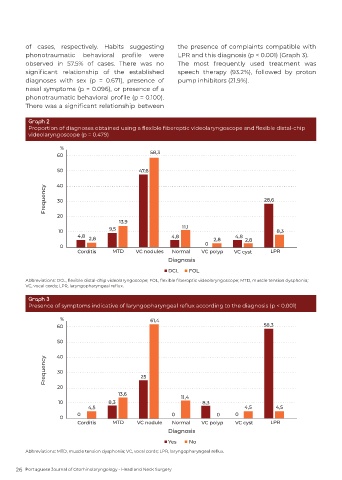
          phonotraumatic  behavioral  profile  were         LPR and this diagnosis (p < 0.001) (Graph 3).
          observed in 57.5% of cases. There was no          The most frequently used treatment was
          significant  relationship  of  the  established   speech therapy (93.2%), followed by proton
          diagnoses  with  sex  (p =  0.671),  presence  of   pump inhibitors (21.9%).
          nasal symptoms (p = 0.096), or presence of a
          phonotraumatic behavioral profile (p = 0.100).
          There was a significant relationship between

          Graph 2
          Proportion of diagnoses obtained using a flexible fiberoptic videolaryngoscope and flexible distal-chip
          videolaryngoscope (p = 0.479)


          Abbreviations: DCL, flexible distal-chip videolaryngoscope; FOL, flexible fiberoptic videolaryngoscope; MTD, muscle tension dysphonia;
          VC, vocal cords; LPR, laryngopharyngeal reflux.

          Graph 3
          Presence of symptoms indicative of laryngopharyngeal reflux according to the diagnosis (p < 0.001)


          Abbreviations: MTD, muscle tension dysphonia; VC, vocal cords; LPR, laryngopharyngeal reflux.

      26  Portuguese Journal of Otorhinolaryngology - Head and Neck Surgery

