


Page 120 - Portuguese Journal - SPORL - Vol 61. Nº1
P. 120
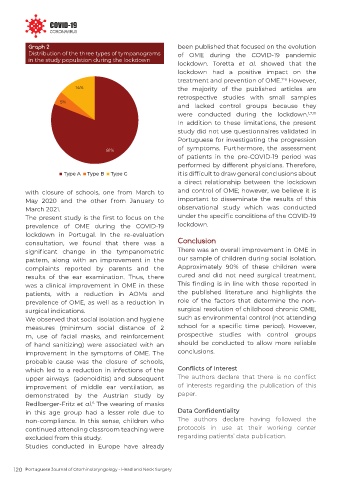
Graph 2                                           been published that focused on the evolution
          Distribution of the three types of tympanograms   of OME during the COVID-19 pandemic
          in the study population during the lockdown
                                                            lockdown. Toretta  et al. showed that the
                                                            lockdown had a positive impact on the
                                                            treatment and prevention of OME.  However,
                                                                                              7-9
                                                            the majority of the published articles are
                                                            retrospective studies with small samples
                                                            and lacked control groups because they
                                                            were conducted during the lockdown.        1,7,10
                                                            In addition to these limitations, the present
                                                            study did not use questionnaires validated in
                                                            Portuguese for investigating the progression
                                                            of  symptoms.  Furthermore,  the  assessment
                                                            of patients in the pre-COVID-19 period was
                                                            performed by different physicians. Therefore,
                                                            it is difficult to draw general conclusions about
                                                            a direct relationship between the lockdown
         with closure of schools, one from March to         and control of OME; however, we believe it is
         May 2020 and the other from January to             important to disseminate the results of this
         March 2021.                                        observational study which was conducted
         The present study is the first to focus on the     under the specific conditions of the COVID-19
         prevalence of OME during the COVID-19              lockdown.
         lockdown in Portugal. In the re-evaluation
         consultation, we found that there was a            Conclusion
         significant  change  in  the  tympanometric        There was an overall improvement in OME in
         pattern, along with an improvement in the          our sample of children during social isolation.
         complaints  reported  by  parents  and  the        Approximately 90% of these children were
         results of the ear examination. Thus, there        cured and did not need surgical treatment.
         was a clinical improvement in OME in these         This  finding  is  in  line  with  those  reported  in
         patients,  with a reduction in  AOMs and           the published literature and highlights the
         prevalence of OME, as well as a reduction in       role of  the  factors  that determine  the  non-
         surgical indications.                              surgical resolution of childhood chronic OME,
         We observed that social isolation and hygiene      such as environmental control (not attending
         measures (minimum social distance of 2             school  for  a  specific  time  period).  However,
         m, use of facial masks, and reinforcement          prospective  studies  with  control  groups
         of hand sanitizing) were associated with an        should  be  conducted  to  allow  more  reliable
         improvement in the symptoms of OME. The            conclusions.
         probable cause was the closure of schools,
         which led to a reduction in infections of the      Conflicts of Interest
         upper airways  (adenoiditis) and subsequent        The  authors  declare  that  there  is  no  conflict
         improvement of middle ear ventilation, as          of interests regarding the publication of this
         demonstrated by the Austrian study by              paper.
         Redlberger-Fritz et al.  The wearing of masks
                                6
         in this age group had a lesser role due to         Data Confidentiality
         non-compliance. In this sense, children who        The authors declare having followed the
         continued attending classroom teaching were        protocols in use at their working center
         excluded from this study.                          regarding patients’ data publication.
         Studies conducted in Europe have already


      120  Portuguese Journal of Otorhinolaryngology - Head and Neck Surgery

